Tesla Announces In-House Mapping System for FSD
The automaker is developing a proprietary navigation layer to resolve persistent errors in speed limit detection and parking logic.
By Jacob Leary ·
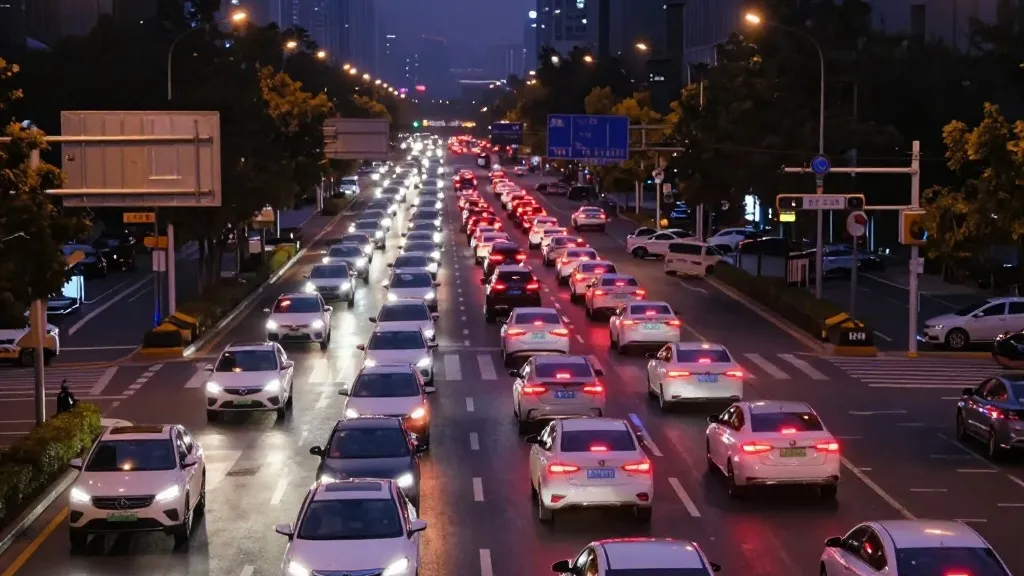
Tesla is developing its own proprietary mapping architecture to address recurring failures in its Full Self-Driving (FSD) system, specifically regarding speed limit recognition, parking maneuvers, and route selection. This development was confirmed during the company’s Q3 2026 earnings call, marking a significant strategic pivot for the automaker. The new system will utilize data collected from the Tesla fleet to construct a dynamic map that integrates with the company’s AI-based navigation stack.
The decision to build internal maps represents a notable reversal from the company’s long-standing public stance. For years, Tesla’s leadership argued that relying on external or high-definition maps made self-driving systems brittle and dependent on external inputs. Instead, the company promoted a vision-only approach, suggesting that cameras and artificial intelligence were sufficient to navigate any environment without the need for pre-mapped data. This new initiative aligns Tesla’s operational methodology more closely with competitors like Waymo, which uses sensor-equipped vehicles to map road networks before launching services.
The push for internal mapping was prompted by direct feedback from shareholders during the earnings call’s Q&A segment. One retail investor highlighted that mapping inaccuracies remained a primary source of frustration for FSD users, citing speed limits, parking, and typical route choices as the top three issues. In response, Tesla’s VP of AI, Ashok Elluswamy, agreed that the company should no longer depend on external map providers. He outlined a plan where the new architecture will first handle trip beginnings and endings with the FSD v15 release, before expanding to cover full navigation, parking, and destination handling in subsequent months.
This shift follows a turbulent history regarding Tesla’s approach to cartography. In 2015, the company initially announced plans to build high-precision maps using customer vehicle data. However, during its 2019 Autonomy Day, CEO Elon Musk explicitly dismissed high-precision lane maps as a "huge mistake" and a "really bad idea," arguing they rendered systems "extremely brittle." He also labeled lidar a "fool’s errand," reinforcing the narrative that Tesla could solve driving through cameras and AI alone. Seven years later, the company is implementing a map layer to correct the exact environmental misunderstandings that the vision system frequently encounters.
The need for improved mapping is underscored by recent performance data. Last month, a Belgian road safety group reported that FSD exceeded speed limits in 55% of 30 km/h zones tested in Brussels, often because the vehicle’s display incorrectly showed a 50 km/h limit. Meanwhile, the U.S. National Highway Traffic Safety Administration is considering an investigation into claims that Tesla Robotaxis have sped through active school zones. These incidents highlight that even simple road information, such as speed limit signs, remains a challenge for the current end-to-end vision model.
Moving forward, Tesla’s fleet will function as a continuous mapping tool, with vehicles collecting visual data to refine the company’s internal map. This approach supports the current Robotaxi operation, which runs within geofenced city areas. While the new system is not yet described as a centimeter-level high-definition map, the gradual increase in detail suggests a trajectory toward higher precision. This development may also influence the timeline for unsupervised FSD in consumer vehicles, which is currently targeted for the second quarter of 2027.
The creation of a proprietary map layer allows Tesla to better understand its driving environment, reducing reliance on third-party data that may contain errors. By leveraging the collective experience of millions of vehicles, the company aims to create a more robust navigation system that adapts to individual driver preferences and voice commands. This strategy acknowledges that while vision is powerful, a well-maintained map provides a critical layer of context for reliable autonomous driving.
Source: Electrek